
 By concept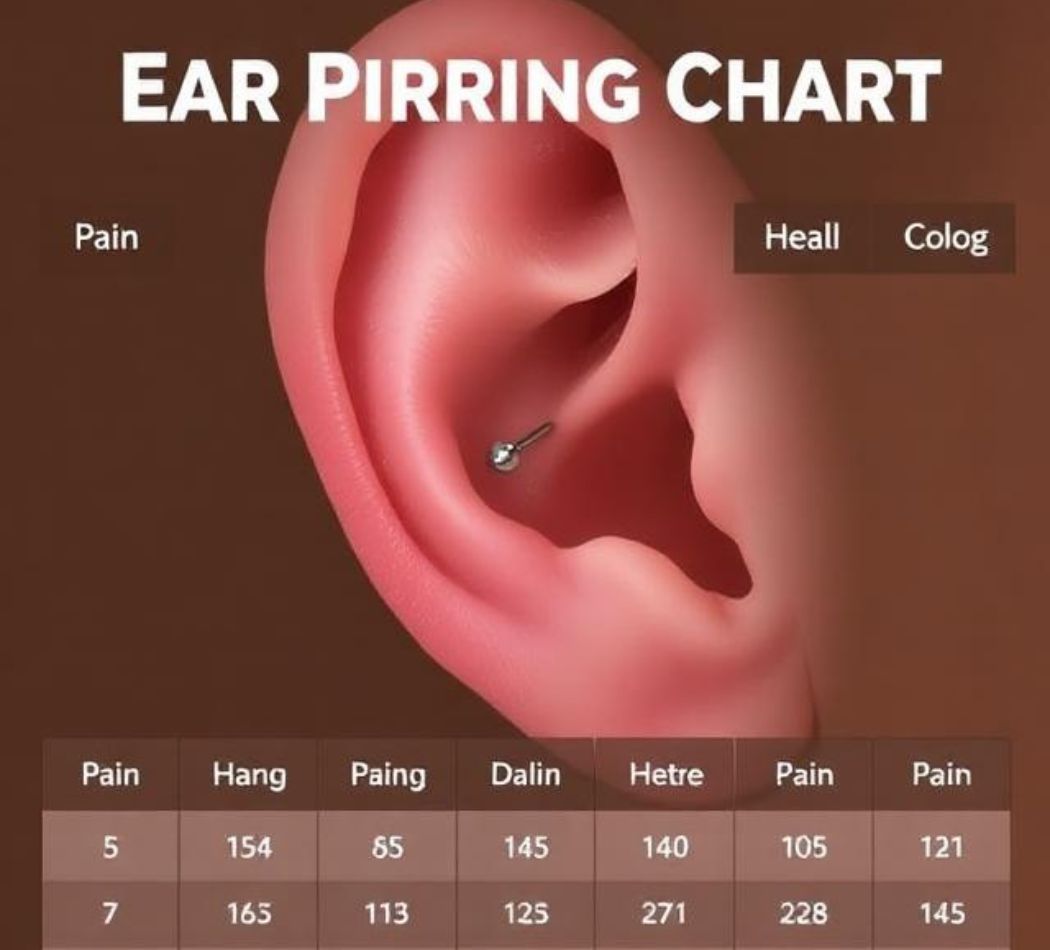
You’re standing in front of the mirror, tilting your head, trying to visualize that perfect cluster of jewelry you’ve been dreaming about. A delicate stud here, a tiny hoop there—but what are those piercings even called? And more importantly, which ones will actually work with your ear anatomy?
Gone are the days when a single lobe piercing on each ear was the only option. Today’s ear piercing chart reads like a treasure map of cartilage real estate—the helix, conch, daith, tragus, and beyond. In 2026, ear curations have become the ultimate form of self-expression, with everything from minimalist single-piercing statements to elaborate constellation designs that would make an astrologer swoon.
Whether you’re a first-timer wondering if cartilage piercings really hurt that much or a seasoned collector planning your next addition, this comprehensive ear piercing chart will walk you through every placement, healing time, pain level, and styling possibility. Let’s decode the anatomy of your ear and find your perfect piercing match.
What Is an Ear Piercing Chart?
Before we dive in, let’s get clear on what we’re working with. An ear piercing chart is essentially a visual map of the ear that identifies all the possible piercing locations, their anatomical names, and key details about each placement. Think of it as your roadmap to a curated ear—without it, you might find yourself pointing vaguely at your ear and saying, “I want a piercing… here-ish.”
Modern piercing studios often offer “curation” services where professional piercers examine your unique ear anatomy and recommend complementary placements. Some call it “Ear Alchemy”—a magical transformation process that combines your personal style with your ear’s natural contours. But even if you’re going the DIY consultation route, understanding the chart is your essential first step.
The Complete Ear Piercing Chart
Lobe Piercings: The Foundation of Your Ear Story
Standard Lobe Piercing
The most common piercing on any ear piercing chart—and for good reason. Located in the fleshy lower part of your ear, this is where most piercing journeys begin. Healing time is approximately 4-6 weeks, with a pain level around 3/10. You’ll typically be pierced with 20G or 18G jewelry.
Stacked Lobe Piercing
This trend has exploded in popularity—it’s when you have multiple piercings ascending the fleshy part of your lobe. Think of it as creating a beautiful, graduated staircase of jewelry. Healing time is similar to standard lobes (4-6 weeks), and they offer incredible versatility for mixing studs and tiny hoops.
High Lobe / Upper Lobe Piercing
Positioned just above the standard lobe, where the fleshy part begins transitioning to cartilage. It’s still generally an easier heal than full cartilage piercings, taking about 3-6 months.
Outer Cartilage Piercings: The Statement Makers
Helix Piercing
The helix is the outer cartilage rim of your ear—arguably the most popular cartilage piercing after lobes. It sits along the upper outer edge and offers a versatile canvas for studs or hoops. Healing time: 6-12 months. Pain level: around 5/10.
Forward Helix Piercing
Located on the upper cartilage ridge toward the front of your ear, close to your face. It’s a delicate area that many people get in multiples—two or three forward helix piercings create a stunning “staircase” effect. Healing time: 6-12 months. Pain level: approximately 6/10. Note: this placement is anatomy-dependent, so consult a professional.
Auricle Piercing
Think of this as the middle child between your helix and your lobe—it’s located on the middle outer ear cartilage fold. Healing time: 3-9 months. It’s a great option if you want the look of a cartilage piercing but aren’t quite ready for the commitment of a higher helix.
Flat Piercing
This one sits on the flat area of cartilage below your upper ear rim—the relatively smooth surface that doesn’t have folds or ridges. It’s an excellent canvas for statement studs because your jewelry sits beautifully within the ear’s natural frame. Healing time: 6-12 months.
Inner Cartilage Piercings: The Bold Statements
Conch Piercing
Nestled in the center of your ear—that cup-shaped area that resembles a conch shell (hence the name) . There are two types: inner conch (closer to your ear canal, ideal for a stud) and outer conch (closer to the edge, ideal for a hoop) . Healing time: 6-12 months. Pain level: around 6/10. This is a popular placement for statement pieces—a larger gemstone stud here becomes an instant focal point.
Daith Piercing
The daith passes through the innermost cartilage fold, right above your ear canal. It’s become highly sought-after—partly for its unique aesthetic, and partly because some people believe it helps with migraine relief (though the evidence is anecdotal rather than scientifically proven). Healing time: approximately 6-12 months. Pain level: around 4/5. Tip: you’ll typically wear a hoop or a circular barbell in this placement.
Rook Piercing
Positioned on the ridge of cartilage between the daith and forward helix, the rook is a vertical piercing that adds interesting depth to your ear stack. It’s located higher than the daith and passes through a fairly thick piece of cartilage, making it one of the more painful options—around 5/5. Healing time: 6-18 months. Best jewelry: curved barbells or small hoops.
Tragus Piercing
Located on that small, thick flap of cartilage directly in front of your ear canal. This is a hugely popular placement because the jewelry is visible when viewing your face straight-on. Healing time: 6-12 months. Pain level: around 5/10. Tip: be mindful of earbuds during the healing period, and choose flat-back studs rather than butterfly backs (which could potentially drop into your ear canal).
Anti-Tragus Piercing
Positioned opposite the tragus, on the small ridge of cartilage above your earlobe. This is an uncommon and sophisticated placement—it’s perfect for a petite hoop. Healing time: 6-12 months. Pain level: around 4/5. Important: anatomy-dependent; not everyone has enough cartilage in this area.
Snug Piercing
Located on the inner cartilage ridge between the helix and conch—it’s essentially the inner counterpart to the outer auricle. This is considered one of the more challenging cartilage piercings due to its thick cartilage and tricky healing process—approximately 8-12 months. Pain level: 5/5.
Combination Piercings: Twice the Impact
Industrial Piercing
An industrial consists of two piercings connected by a single straight barbell—typically entering the helix and forward helix. It’s a bold, geometric statement that requires precise anatomy (your ear must have the right curve to accommodate a straight bar). Healing time: 9-12 months. Pain level: 5/5. Gauge: typically 14G or 16G.
Orbital Piercing
Not to be confused with a regular hoop! An orbital is a combination of two piercings connected by one circular piece of jewelry. They’re commonly done on the lobe or auricle area, but can be placed almost anywhere on your ear with enough space for two piercings side-by-side. Healing time: 3-12 months (depending on location).
Constellation Piercing
This isn’t a single placement—it’s a curated arrangement of multiple piercings that resemble a constellation of stars. The term was coined by celebrity piercer Brian Keith Thompson, and it’s become the gold standard for ear curation. Each constellation is unique to your ear’s anatomy, making it truly one-of-a-kind.
At-a-Glance Ear Piercing Chart
| Piercing Type | Location | Healing Time | Pain Level (1-10) | Gauge |
|---|---|---|---|---|
| Standard Lobe | Fleshy lower ear | 4-6 weeks | 3 | 20G-18G |
| Stacked Lobe | Above standard lobe | 4-6 weeks | 4 | 20G-18G |
| Helix | Upper outer rim | 6-12 months | 5 | 16G-18G |
| Forward Helix | Front upper ridge | 6-12 months | 6 | 16G-18G |
| Auricle | Middle outer fold | 3-9 months | 5 | 16G-18G |
| Flat | Flat upper cartilage | 6-12 months | 5 | 16G |
| Conch | Center cup area | 6-12 months | 6 | 16G |
| Daith | Innermost cartilage fold | 6-12 months | 8 | 16G-14G |
| Rook | Upper inner ridge | 6-18 months | 9 | 16G |
| Tragus | Cartilage in front of canal | 6-12 months | 5 | 16G |
| Anti-Tragus | Above lobe, opposite tragus | 6-12 months | 8 | 16G |
| Snug | Inner ridge | 8-12 months | 9 | 16G |
| Industrial | Connecting two upper placements | 9-12 months | 8 | 14G-16G |
Note: Pain is subjective—these are general estimates only.
Which Piercing Should You Get? A Decision Framework
Choosing the right piercing isn’t just about what looks cool on Instagram. Here’s a framework to guide your decision:
Start with Your Pain Tolerance
If you’re new to piercings or nervous about pain, start with a lobe piercing or a helix. Save rook, snug, and industrial piercings for when you’ve built up your tolerance (and your trust in your piercer).
Consider Your Lifestyle and Habits
Sleep on your side? You’ll want to invest in a travel pillow to keep pressure off your healing piercings. Wear earbuds regularly? Avoid tragus piercings until they’re fully healed. Work in a job that requires a particular dress code? Consider more discreet placements like inner conch or daith.
Work with Your Anatomy
The most important factor—and the one most people overlook—is your unique ear anatomy. Not every placement will work for every ear. Professional piercers will assess your ear’s shape and cartilage thickness to determine what’s possible. “The ear’s size and shape will determine how many piercings you can fit”.
Think About Jewelry
Some placements are better suited to specific jewelry types. Conch piercings are perfect for statement studs; daith piercings work beautifully with hoops; flat piercings are ideal for showcasing unique designs. Consider what kind of jewelry you love before choosing a placement.
The Healing Process: What to Expect
Lobe Piercings heal relatively quickly—about 2-3 months—because the tissue is fleshy and highly vascular. You’ll experience a brief pinch during the piercing, followed by a few days of tenderness. Avoid changing your jewelry during the healing period, and keep the area clean with saline solution.
Cartilage Piercings require significantly more patience. Most take 6-12 months to fully heal, with some (like rook and snug) taking up to 18 months. Why? Cartilage has poor blood supply compared to the fleshy lobe, meaning healing nutrients take longer to reach the area. The outer skin heals first, but the cartilage itself takes much longer—so don’t assume you’re healed just because the outside looks fine.
General Timeline Guidelines:
-
Lobe: 4-6 weeks (but keep jewelry in for at least a year to prevent closure)
-
Helix/Tragus/Conch/Daith: 6-12 months
-
Rook/Snug/Industrial: 9-18 months
Pro tip: Professional piercers typically won’t perform more than three cartilage piercings at once. Your body needs time to heal each one properly.
Common Mistakes & Challenges—and How to Avoid Them
1st Mistake: Sleeping on a New Piercing
The pressure can cause irritation bumps and prolong healing. Solution: Invest in a U-shaped travel pillow and sleep with your ear in the opening. Your healing piercing will thank you.
2nd Mistake: Using a Piercing Gun on Cartilage
Guns can shatter cartilage (yes, really) and are impossible to fully sterilize. Solution: Always choose a professional piercing studio that uses single-use hollow needles for all piercings—especially cartilage.
3rd Mistake: Changing Jewelry Too Soon
Just because it’s not hurting anymore doesn’t mean it’s healed. Solution: Wait for your piercer’s explicit approval before changing your jewelry.
4th Mistake: Ignoring Signs of Infection
Redness, swelling, warmth, discharge, and tenderness are red flags. Solution: Clean with saline solution twice daily, avoid touching, and if symptoms worsen or persist, see a doctor.
5th Mistake: Touching or Twisting the Jewelry
This introduces bacteria and irritates the piercing. Solution: Hands off! Only touch when cleaning.
The Curated Ear Trend: Designing Your Personal Constellation
What sets 2026’s piercing culture apart is the concept of curation. Rather than adding piercings randomly, people are approaching their ear like a jewelry gallery—strategically planning placements, considering balance and flow, and choosing jewelry that tells a story.
Some studios now offer “mapping” services where piercers examine your anatomy, discuss your style preferences, and plan a custom constellation across multiple appointments. This approach ensures that your ear stack evolves harmoniously rather than chaotically.
Popular combination strategies:
-
The Minimalist: Tragus + single helix + double lobes
-
The Curved Curation: Forward helix + conch + stacked lobes curving upward
-
The Statement Ear: Industrial + rook + flat + lobe stack
-
The Hidden Detail: Daith + inner conch + tragus (less visible from front, dramatic from side)
Future Trends in Ear Piercing (2026 and Beyond)
Sustainable and High-Quality Materials
The shift toward fine jewelry in piercings—14k and 18k gold, lab-grown diamonds, titanium—isn’t just about looking luxury. It’s about biocompatibility. High-quality, nickel-free metals reduce irritation and support faster healing.
More Piercing Options
As of 2026, piercing studios are expanding their offerings. New placements invented by piercers (like the “Tash Rook” and “Hidden Rook”) are gaining popularity, giving people even more ways to customize their look.
Gender-Neutral and Style-Agnostic Appeal
Piercing is no longer heavily gendered. Ear curations are embraced across all identities as a form of personal expression.
Educational Focus
Brands are investing in education—teaching customers not just what to buy, but why certain jewelry works for specific placements and how to care for their piercings.
Conclusion: Your Ear, Your Canvas
Your ear piercing chart is more than a diagram—it’s your launchpad to a curated, artistic, and personal form of self-expression. Whether you’re starting with your first lobe piercing or building an elaborate constellation, knowledge is your most powerful tool.
Key Takeaways
-
Start with research: Understand the placements, healing times, and pain levels before your appointment.
-
Choose a professional: Seek out reputable studios that use single-use needles, not piercing guns (especially for cartilage).
-
Respect your anatomy: Not every placement works for every ear—trust your piercer’s assessment.
-
Be patient with healing: Cartilage takes months, sometimes over a year. Good aftercare is non-negotiable.
-
Think of your ear as a gallery: Plan your piercings in advance for a cohesive, beautiful result.
-
Invest in quality jewelry: Implant-grade titanium, 14k or 18k gold, and nickel-free materials are worth the investment.
The perfect piercing isn’t just about where you put the hole—it’s about how it fits into the story of you. So study your ear piercing chart, find a piercer you trust, and start creating.
Frequently Asked Questions
How long do ear piercings take to heal?
Healing times vary dramatically. Lobe piercings: 4-6 weeks. Cartilage piercings: 6-12 months (some up to 18 months). The outer skin heals first, while the cartilage itself takes longer. Wait for your piercer’s approval before changing jewelry.
What is the most painful ear piercing?
Rook, snug, and industrial piercings are considered the most painful because they pass through thick cartilage. Pain levels range from 8-9/10. Lobe piercings are the least painful at 3/10.
Can I wear earbuds with a tragus piercing?
It’s generally not recommended during the healing period (6-12 months). The pressure can cause irritation and prolong healing. Once healed, you may be able to wear some earbuds, but over-ear headphones or bone-conduction earbuds are better options during healing.
Does a daith piercing help with migraines?
Some people report migraine improvement after getting a daith piercing, but this is based on anecdotal evidence—not scientific proof. The theory draws from acupuncture points in that area, but the results are not universal. Consider this an added bonus if you love the piercing, not a medical treatment.
How much do ear piercings cost?
Lobe piercings: $20-$70. Cartilage piercings: $30-$100 or more. Prices vary by studio, location, and whether you’re including jewelry in the cost. Always prioritize quality and safety over the cheapest price.
Is it okay to use a piercing gun on cartilage?
No. Piercing guns should only be used on lobe piercings, if at all. Cartilage requires a single-use hollow needle used by a trained professional—guns can shatter cartilage and carry higher infection risks.
How do I clean a new piercing?
Use sterile saline solution (like H2Ocean) or a saline wound wash twice daily. Gently clean around the jewelry—don’t rotate or twist it. Avoid alcohol, hydrogen peroxide, or harsh soaps which can irritate the piercing.
Can I get multiple piercings at once?
Most professional piercers will limit you to 3-4 piercings per session to give your body time to heal. Your immune system can only handle so much trauma at once. Space out major cartilage piercings for better results.
What’s the difference between an orbital and an industrial piercing?
Both involve two piercings, but orbitals are connected by a circular hoop that goes through two holes, while industrials are connected by a straight barbell. Industrials are typically on the upper ear; orbitals can be anywhere.
How do I know if my piercing is infected?
Look for: persistent redness, swelling that worsens, warmth around the piercing, yellow/green discharge, increasing pain, or fever. If you notice these, clean with saline, avoid touching, and if symptoms worsen, see a healthcare provider.
Sources:
-
Spencer’s Piercing Guide
-
Lark & Berry Piercing Placement Guide
-
Grazia Daily Piercing Guide
-
Harper’s Bazaar Australia
-
Wolf & Badger Piercing Guide
-
The Piercing Bible, Revised and Expanded by Elayne Angel
-
ELLE Australia Piercing Guide
-
Missoma Piercing Guide
-
Celinni Piercing Guide
-
WebMD Ear Piercing Guide