
 By concept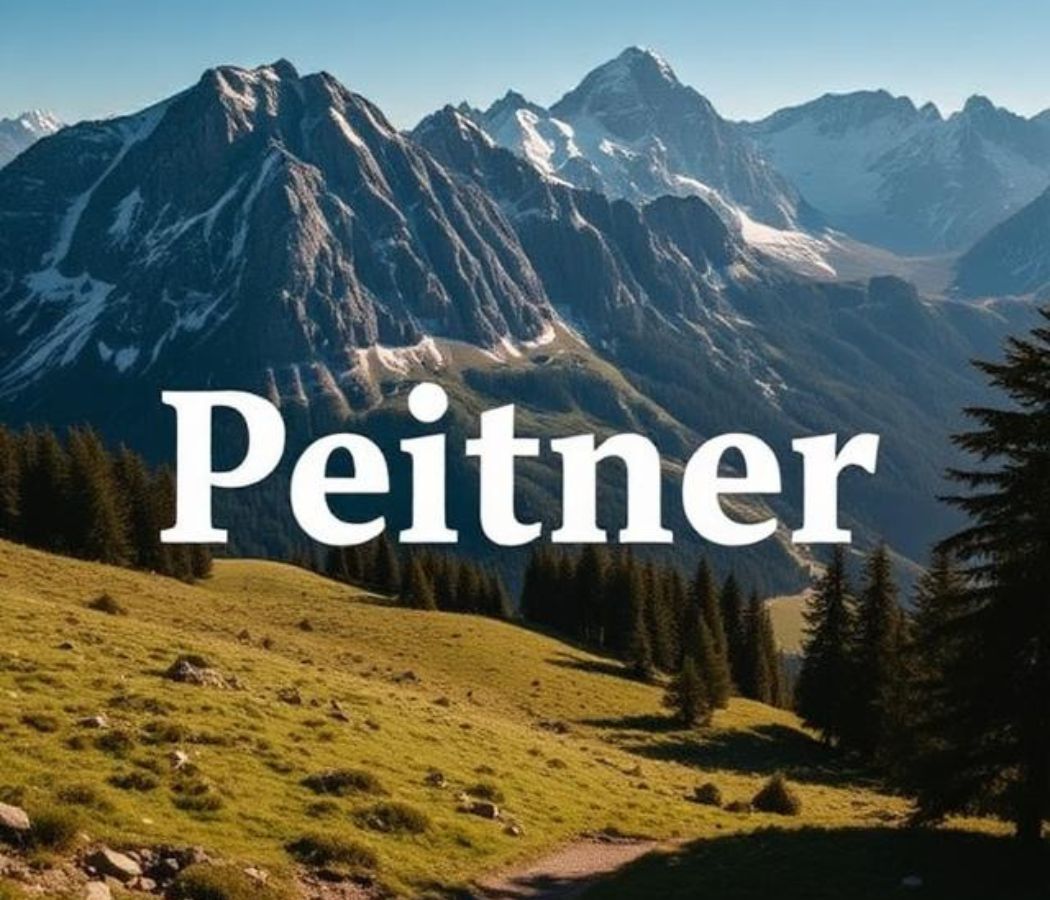
Have you ever come across the name Peitner and wondered where it comes from? While it might be less common than Smith or Jones, the surname Peitner carries a rich tapestry of history, geography, and culture. If you are tracing your family tree or simply love the stories behind old European names, understanding Peitner offers a fascinating glimpse into life in the Alpine regions of Europe.
This is the story of a name born in the mountains.
The Origin of the Peitner Surname
The surname Peitner is primarily a topographic name. Unlike occupational names that tell you what a person did for work, topographic names tell you where they lived. In the medieval period, when surnames were becoming necessary for record-keeping, people were often identified by the landmarks near their homes.
In the case of Peitner, this landmark was the mountain. The name is strongly connected to the Germanic Alpine regions, specifically Austria (Tyrol), Bavaria, and parts of northern Italy.
Linguistically, the name breaks down simply. In Middle High German traditions, the root of the word is believed to refer to a “mountain spur,” “slope,” or “hillside terrain”. The suffix “-er” is a common German-language addition used to denote a person associated with a specific place. Therefore, a “Peitner” was essentially a person who lived on or near a steep incline or rocky ridge.
The Dual Origins Theory
One of the most interesting aspects of the Peitner name is that historians generally agree on two distinct possible origins, making it a unique subject for genealogists.
1. The Geographic Connection (Alpine Topography)
This is the most widely accepted theory. In the rugged terrain of Tyrol, villages were often built on high ground or slopes. A family living on a “Peit” (an old term for a mountain spur) would be referred to as the “Peitner” family to distinguish them from those living in the flat valley below. The name signifies resilience, as mountain life required hard work and a strong connection to the land.
2. The Occupational Connection (Metalworking)
There is a secondary theory with roots in Ashkenazic Jewish history. In this interpretation, the name may derive from a Yiddish word related to soldering or metalwork. If this is the case, a Peitner might have originally been a tinsmith or a skilled metalworker. This dual heritage makes the surname particularly special, as it could represent either the “mountain dweller” or the “craftsman.”
Variations of the Name
As with many European names that were passed down orally before being written in church registries, spelling variations are common. Depending on the region and the era, you might find records for Peintner or Peithner. Today, these are generally considered variations of the same root name.
The Legacy of Peitner in Tyrol
The cultural home of the Peitner name is undoubtedly the Tyrol region. This area is famous for its fierce independence, stunning Alps, and preservation of tradition. To bear the name Peitner is to carry a piece of that identity.
This connection is so strong that the name appears in modern contexts, such as the contemporary Austrian artist Max Peintner (born 1937). Known for his critical, sarcastic drawings of technology and modern life, Max Peintner represented Austria at the Venice Biennale, bringing the name into the world of high art.
Why This Matters Today
Whether you are a descendant of the Peitner line or just a history enthusiast, names like this matter because they ground us in a specific time and place. The Peitner name tells the story of survival in the Alps. It conjures images of snow-capped peaks, green meadows, and small villages where family heritage was the most valuable currency.
In a world that is increasingly globalized and digital, looking back at a topographic name like Peitner reminds us that our identities were once intimately tied to the physical earth beneath our feet.