
 By concept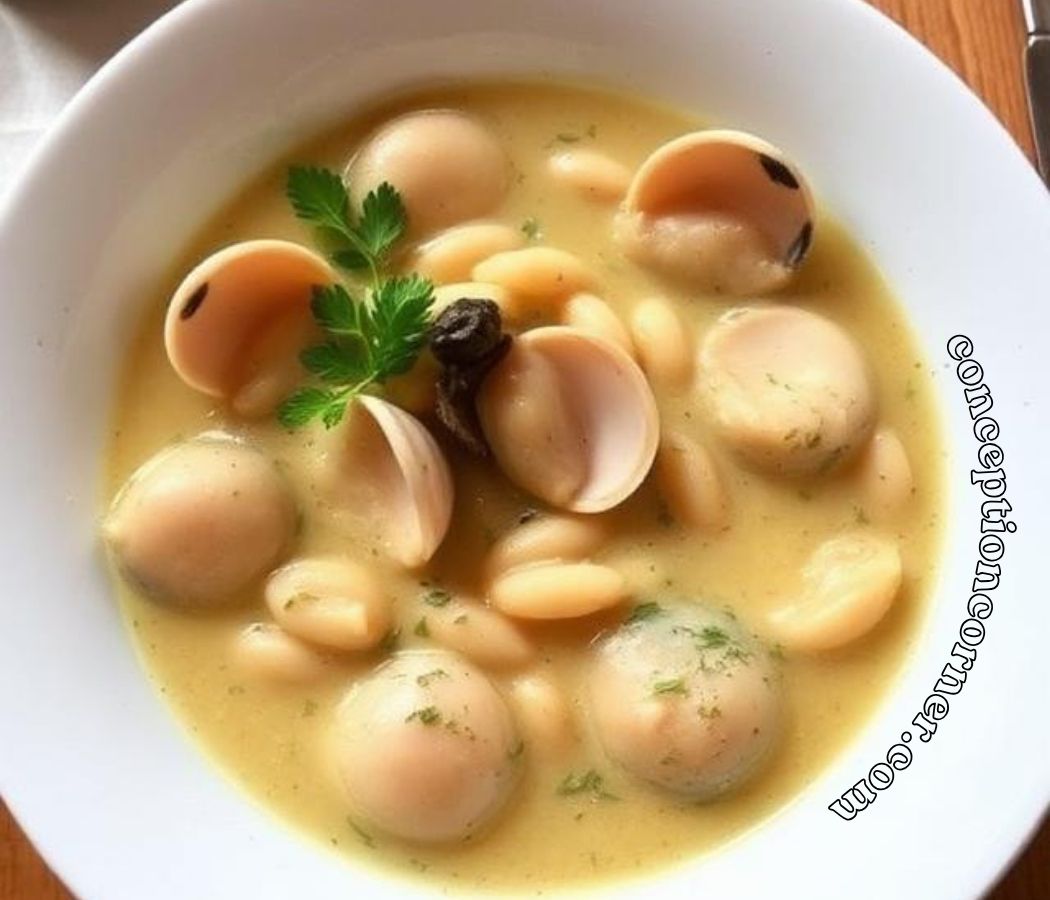
When people think of Spanish seafood, they usually imagine sizzling prawns or battered squid. But tucked away in the green hills of northern Spain lies a dish that breaks all the rules: Fabes con Almejas.
Imagine a bowl of the creamiest, butter-soft white beans swimming in a silky, saffron-infused broth, punctuated by briny, tender clams. It is the ultimate comfort food. It is hearty enough for a winter dinner yet elegant enough for a spring lunch.
If you are currently searching for “best fabes con almejas near me,” you are likely hunting for this specific texture—where the beans melt on your tongue and the sea meets the earth in perfect harmony. This guide will tell you exactly what to look for and how to find the real deal.
What Are Fabes con Almejas? (And Why the Beans Matter)
Originating in Asturias in the 19th century, Fabes con Almejas started as a clever peasant dish—a lighter alternative to the heavy pork-laden Fabada Asturiana. By swapping chorizo and morcilla for fresh clams from the Cantabrian Sea, local cooks created a masterpiece.
The “Fabes” Factor: The “fabes” (specifically Fabes de la Granja) are not your average canned beans. They are a specific variety of large white bean grown in Asturias known for their paper-thin skin and incredibly buttery texture. They absorb liquid beautifully without falling apart. If a restaurant uses generic white beans, it is not authentic.
The Flavor Profile: The stew is delicate. The broth gets its depth from a soft sauté of onion, garlic, and usually a touch of sweet paprika and saffron (or food coloring), giving it a warm golden hue. Unlike heavy stews, this one relies on the brine from the clams and the starch from the beans to create a naturally creamy salsa.
What to Look for in “The Best” Version
If you are typing “best fabes con almejas near me” into a search engine, here is a checklist to help you spot a 10/10 version when you sit down at the table:
-
The Bean Texture: The beans should be whole but just holding their shape. When you press one against the roof of your mouth, it should dissolve into a paste with no chalkiness.
-
The Broth: It should be slightly viscous (almost gelatinous) from the bean starch. Watery broth is a red flag.
-
The Clams: They should be fresh, not rubbery. The classic choice is Almeja Japónica or Fina, prized for their sweetness.
-
The Scent: You should smell the sea, but also the sweet aroma of olive oil, garlic, and bay leaf.
How to Find Authentic Restaurants Near You
Since I do not have your specific GPS location, I cannot give you a single name. However, Fabes con Almejas is a regional specialty. If you are in Spain (or a high-end Spanish restaurant abroad), here is how to hunt it down:
1. Look for “Casa de Comidas” or “Marisquerías”
In cities like Madrid or Barcelona, the best fabes are rarely found in trendy fusion spots. You want an old-school Marisquería (seafood restaurant) or a Casa de Comidas (traditional eatery). Look for places that list “Producto de Asturias” on their menu.
2. Check for “Menú del Día”
The best versions often appear on the Thursday or Friday “Menú del Día” in northern Spain. This is when restaurants rotate in their heavy legume dishes. If you see it as a daily special, grab it.
3. Targeted Search Operators
Instead of just searching “fabes con almejas,” try these Google Maps phrases:
-
“Fabes con almejas Madrid”
-
“Cocina asturiana [Your City]”
-
“Fabada near me” (Restaurants that serve Fabada almost always serve Fabes con Almejas seasonally).
Red Flags to Avoid
-
It arrives in 5 minutes: Good fabes take time (or a pressure cooker). If it hits the table instantly, it is likely reheated from a frozen packet.
-
The beans are hard: This means they were old or cooked at too high a boil.
-
Gritty clams: If the bottom of the bowl tastes like sand, the restaurant did not purge their clams properly in salt water.
Can’t Find It Nearby? The Quick Pressure Cooker Hack
If your search for “best fabes con almejas near me” is coming up empty, you might have to make it at home. While traditionalists soak beans overnight, modern Spanish home cooks use the pressure cooker with amazing results.
Using a pressure cooker cuts the cooking time down to about 25-30 minutes. The trick is to never stir the beans with a spoon while they are hot (it breaks them); instead, shake the pot in a circular motion. Add a spoonful of pimentón de la Vera (smoked paprika) for a deeper color and a splash of Albariño wine for acidity.
Conclusion: The Hunt is Part of the Fun
Fabes con Almejas is not as ubiquitous as paella or tortilla, which makes finding a great version feel like a genuine victory. Whether you find a hole-in-the-wall sidrería in Oviedo or a specific spot on Airbnb Experiences in Madrid, the pursuit of the perfect bowl is a delicious journey.
Pro Tip: When you find a place, order a bottle of Cider (Sidra) or a crisp Albariño to drink with it. The acidity cuts through the creamy beans perfectly.
FAQ: Fabes con Almejas
What is the difference between Fabada and Fabes con Almejas?
Fabada is a heavy stew made with pork sausages, blood sausage, and bacon. Fabes con Almejas is a lighter seafood version using clams.
Can I use canned beans?
Yes, for a quick fix, but the texture will be different. Authentic fabes have a specific creamy texture that canned beans cannot replicate.
Why do my beans always break?
You are stirring too hard! You must shake the pot in a circular motion rather than inserting a spoon.