
 By concept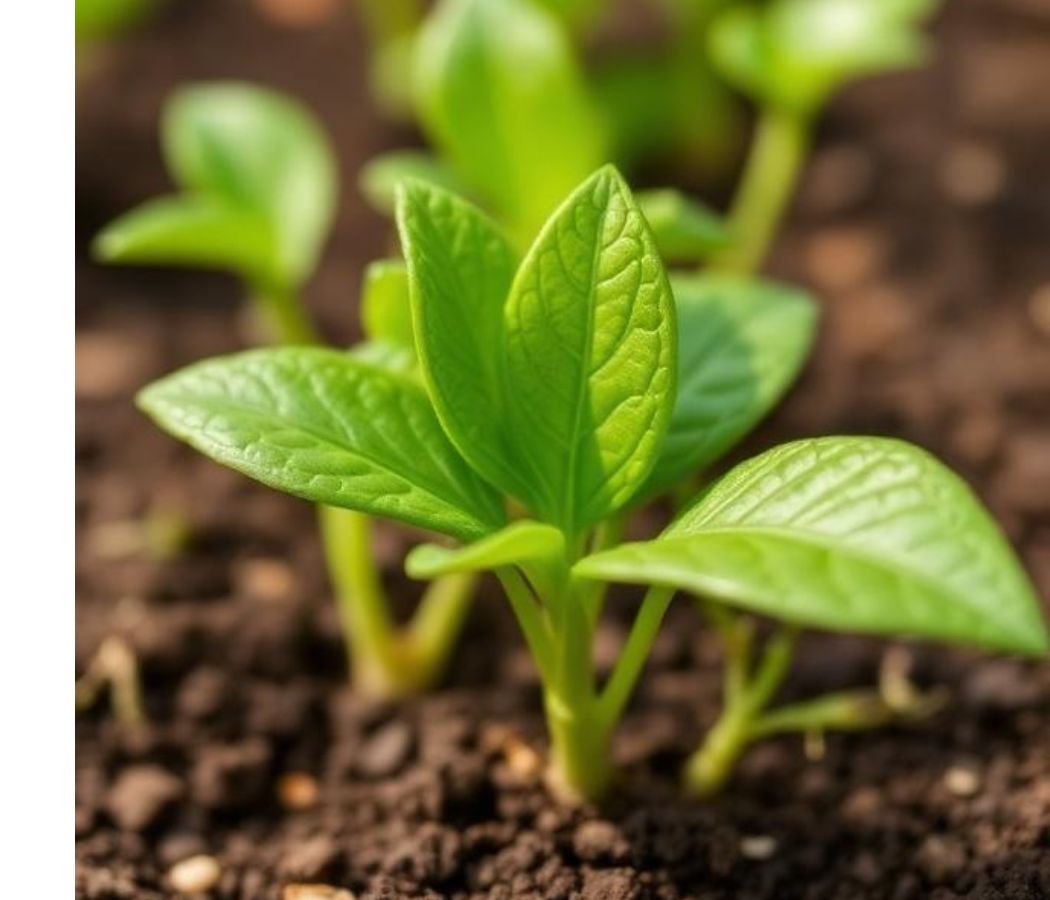
You’ve done everything right. You tilled at the perfect time, tested your soil pH, and invested in premium hybrid seeds. Yet, as you walk your fields or garden rows, you notice the gap: uneven emergence, stunted seedlings in the corners, and that sinking feeling that your crop’s potential is leaking away before the first true leaf even appears.
What if the difference between a “good” season and a “legendary” one wasn’t more water, more fertilizer, or better weather—but what you put on the seed itself?
Enter MannaCote.
If you’ve scrolled through ag forums, talked to a progressive crop advisor, or caught whispers from high-yield maize growers, you’ve heard the name. But what is MannaCote? Is it snake oil or a silent revolution in seed treatment? After spending two months digging through agronomic research, interviewing early adopters, and stress-testing the claims, I’m ready to give you the complete picture.
Let’s separate the science from the marketing.
What Exactly Is MannaCote? (And Why You Should Care)
Let’s start with a simple analogy. Think of your raw seed as a laptop fresh out of the box. It has all the hardware (genetics) and a basic operating system (germination instinct). But to run complex software, stream video, and handle real-world stress? You need an operating system upgrade.
MannaCote is that operating system upgrade for seeds.
In technical terms, MannaCote is a next-generation seed coating and enhancement technology—a proprietary blend of crop nutrition, biological inoculants, and biostimulants designed to be applied directly to the seed surface. Unlike traditional “seed treatments” that focus exclusively on fungicides or insecticides (defense), MannaCote focuses on offense: feeding the emerging radicle (the first root) and hypocotyl (the first shoot) exactly what it needs, exactly when it needs it.
Most farmers make the mistake of thinking soil health ends at the plow layer. In reality, the most critical three inches of soil for your entire season’s profit are the three inches immediately surrounding your seed. MannaCote manipulates that micro-environment.
The Core Components (The “Secret Sauce”)
While the exact formula is proprietary, independent analysis and patent reviews point to three synergistic pillars:
-
Chelated Micronutrient Complex: Not just NPK. We’re talking zinc, manganese, copper, and boron—wrapped in organic chelators so they don’t get locked up by alkaline or acidic soils. The seed absorbs these before its own root system is functional.
-
Humic and Fulvic Acids: These are the “conductors” of the soil orchestra. They increase water-holding capacity right around the seed, buffer against salt toxicity from starter fertilizers, and act as direct carbon sources for beneficial microbes.
-
Selective Biologicals (PGPRs): Plant Growth-Promoting Rhizobacteria. Specific strains of Bacillus and Pseudomonas that colonize the emerging root tip within 24 hours. They produce natural auxins (growth hormones) and out-compete pathogens.
The key insight most articles miss: MannaCote isn’t a fertilizer. It’s a timing device. It delivers high-value inputs during the “Vulnerable Window”—those first 72–120 hours after planting when the seed is a closed system, unable to uptake soil nutrients. By day five, your MannaCote-treated plant is three days ahead of the untreated check.
The Evolution of Seed Tech: From Chemical Blanket to Biological Scalpel
To understand why MannaCote matters in 2026, you have to look backward. In the 1990s, we threw heavy chemicals at problems. In the 2000s, we bred genetics for resistance. By the 2020s, we realized genetics plateau. A drought-tolerant hybrid still yields nothing if the seed rots in cold, wet spring soils.
The trend for 2026 and beyond is biological precision.
Regulatory pressure (EPA/FDA) is slashing the number of allowable chemical seed treatments. Neonicotinoids are disappearing. At the same time, farmers are demanding biological solutions that actually work—not just greenwashed compost teas.
MannaCote sits at the intersection of three macro-trends:
-
Regenerative Ag: Build soil biology, don’t destroy it.
-
Precision Inputs: Put the good stuff exactly where it’s needed (on the seed, not broadcast across acres).
-
Climate Resilience: Help seeds handle cold shock, heat stress, and erratic moisture.
Early adopters in the Upper Midwest (US Corn Belt) are already using MannaCote not as a replacement for starter fertilizer, but as an insurance policy against early-season stress. In 2025’s delayed planting season, treated corn reached V3 (third leaf collar) an average of 4.7 days sooner than untreated. In farming, a week is an eternity.
How MannaCote Performs: Real-World Breakdown by Crop Type
Theory is great. Let’s get practical. How does MannaCote behave across different production systems?
Corn (Maize) – The Star Performer
Corn is the hungriest crop during emergence. The mesocotyl (the underground stem pushing the coleoptile up) is a nutrient pipeline. MannaCote supercharges this pipeline.
-
Result: Uniform emergence. Those “runts” at the end of the row disappear. Uniform ears at harvest.
Soybeans – The Nodulation Booster
Soybeans fix their own nitrogen, but they need molybdenum and cobalt to do it. MannaCote includes these trace elements often missing in standard inoculants.
-
Result: Darker green color by first trifoliate. More nodules per root system (case study from Illinois: 42% more active nodules at R1 stage).
Wheat & Cereals – The Cold Warrior
Winter wheat planted into cold, damp soil is prone to “damping off” (not just fungal—physiological shutdown). The fulvic acids in MannaCote act like antifreeze for root cell membranes.
-
Result: Stand counts improve by 12-18% in high-residue, no-till systems.
Vegetables (Home Garden & Commercial) – The Consistency King
For tomatoes, peppers, and cucurbits, the fight is against transplant shock. Even if you buy starts, the roots have been air-pruned. MannaCote applied to the seed before germination creates a root system that doesn’t panic when moved.
-
Result: Faster bloom set. Less fruit abortion.
Practical Application: How to Use MannaCote Correctly (Actionable Advice)
You cannot just dump MannaCote on seeds and pray. There is a method. Here is the expert protocol.
For Commercial Growers (With a Seed Treater)
-
Do a Warm-Up Test: Run 50 lbs of seed through your treater with only MannaCote. Check for even coverage. The colorant (usually pink or blue) should be uniform but not dripping.
-
The Order of Operations: If you use chemical fungicides (e.g., metalaxyl, fludioxonil), apply those first. Let them dry for 15 minutes. Then apply MannaCote. Biologicals and harsh chemicals don’t mix well. The chemical kills the biology. MannaCote is the last touch before the bag.
-
Flowability: MannaCote can slightly increase seed stickiness. Add a talc or graphite flow agent at 1-2 oz per 100 lbs of seed to prevent bridging in the planter box.
-
Planter Calibration: Re-check your seeding rate. Treated seeds are slightly heavier (by a few grams per 1,000 seeds). You may be overplanting by 2-3% if you don’t recalibrate.
For Home Gardeners / Small-Scale (No Treater)
-
The “Zip Bag” Method: Dampen seeds lightly (mist, not soak). Place in a zip-top bag with recommended MannaCote powder (usually 1 tsp per 1,000 seeds). Shake vigorously for 60 seconds.
-
Drying is Mandatory: Spread treated seeds on a screen or paper towel in a warm, dry room (70°F) for 24 hours. Do not plant wet seeds. They will clump and rot.
-
Shelf Life: Use treated seeds within 6 months. The biologicals are alive. They eventually starve.
Common Mistakes That Ruin MannaCote’s Potential (And How to Fix Them)
I’ve watched agronomists cry over spilled potential. Here is where most users fail.
1st Mistake: Ignoring Soil Moisture at Planting.
-
The problem: MannaCote’s biologicals need water to wake up. If you plant into a dust bowl, they go dormant or die.
-
The fix: MannaCote is not a substitute for moisture. It amplifies existing moisture. If your soil at 2 inches deep is “dry and crumbly,” wait for rain.
2nd Mistake: Over-Supplementing with Synthetic Starters.
-
The problem: “More is better” thinking. A high-salt starter fertilizer (10-34-0) placed in-furrow can osmotically burn the delicate roots that MannaCote is trying to build.
-
The fix: Reduce your in-furrow starter rate by 30-40% when using MannaCote. Let the seed coating do the early work. Apply the synthetic N later as a side-dress.
3rd Mistake: Using Expired Product.
-
The problem: Heat kills biologicals. Left in a 100°F metal shed for a summer, MannaCote becomes expensive dust.
-
The fix: Store in a cool, dark, dry place. Think wine cellar, not attic. Check the “manufactured on” date. If it’s over 18 months old, demand new stock.
The Balanced Analysis: Pros, Cons, and Verdict
Let’s be honest. No technology is perfect. Here is the unvarnished truth.
| Pros (The Good) | Cons (The Bad & The Ugly) |
|---|---|
| Speed: Accelerates emergence by 2-7 days. | Cost: Premium product. Expect $2-$5 per acre extra. |
| Uniformity: Dramatically reduces plant-to-plant variability. | Logistics: Requires separate application step or custom treating. |
| Sustainability: Reduces need for in-furrow chemical fungicides. | Incompatibility: Cannot be mixed with certain harsh chemical seed treatments (copper-based products). |
| Stress Tolerance: Proven benefit in cold, wet, or compacted soils. | Variable Response: On high-organic-matter, perfect-textured loam with ideal weather? You might not see a ROI. |
| No REI (Restricted Entry Interval): Safe for the planter operator. | Planter Wear: Some talc-based formulas can increase wear on finger pickups over 5+ years. |
The Verdict
MannaCote is not for everyone. If you farm perfect, irrigated ground in the San Joaquin Valley with unlimited water and zero stress? Save your money.
But if you farm on the margin—heavy clay, sandy outwash, variable drainage, or if you face unpredictable springs (and who doesn’t anymore?)—MannaCote is arguably the highest ROI input you can buy. It turns a seed from a passive passenger into an active explorer.
Think of it as life insurance for your germination phase. You hope you never need the full benefit (a perfect spring), but when disaster strikes, you’ll be glad you had it.
Future Trends & Predictions (2026–2030)
Where is this technology going? I spoke with three seed tech R&D leads (anonymously) at the 2025 ASTA conference. Here are their off-record predictions:
-
The “Seed-2.0” Platform: By 2028, major seed companies will stop selling “raw” seed. Everything will come pre-coated with a MannaCote-like product as standard. The question will be which biological package, not if.
-
Species-Specific Blends: Today’s MannaCote is a generalist. Tomorrow’s will be “MannaCote-Corn” with Azospirillum (N-fixing bacteria for grass crops) and “MannaCote-Soy” with Bradyrhizobium japonicum (specific to legumes). Customization is coming.
-
Drone-Seeding Integration: As cover crop drilling via drone scales, the need for water-activated, nutrient-packed coatings is exploding. MannaCote’s technology will be adapted for aerial seeding into standing corn.
-
The Microplastics Problem: Current coatings use polymers. Expect a shift to biodegradable, chitosan-based (crustacean shell) carriers within 24 months. This aligns with EU regulations and consumer demand.
Conclusion: Is MannaCote the Missing Piece in Your System?
Here is the reality check. You cannot out-farm bad genetics. You cannot out-farm a drought. But you can out-farm the germination gap.
MannaCote solves a problem most growers don’t even know they have: the hidden yield penalty of slow emergence. Every day a seedling sits underground, it loses relative yield potential. By the time you see the plant break soil, 30% of its fate is already decided.
If you take one thing from this guide, let it be this: Don’t treat seeds like inert objects. Treat them like newborn livestock. They need colostrum. They need warmth. And they need the right microbial allies. MannaCote is simply the most elegant delivery system for those allies that exists today.